
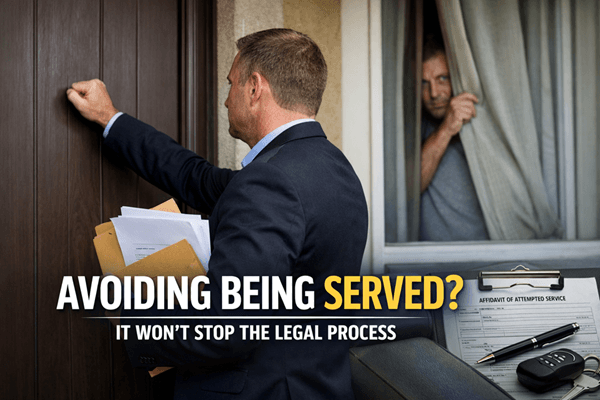
If someone knows legal action is being taken against them, it’s not unusual for them to try and avoid being served with the paperwork. They might ignore the door, refuse to answer calls or simply make themselves difficult to find.
Some people believe that if they don’t accept the documents, the legal process can’t move forward. That’s not really how it works, though…
An experienced process server knows how to deal with situations where someone is avoiding service and will take steps to make sure that documents are delivered correctly or, if it’s necessary, provide the evidence that’s needed for alternative methods of service.
Why Would Someone Avoid Being Served?
There are plenty of reasons why someone might try to avoid being served, but they usually come down to one thing – they just don’t want to deal with what’s inside the envelope.
In some cases, they’re hoping to delay court proceedings. Others believe that if they don’t physically accept the documents, the case will be blocked. Some simply feel anxious about the situation and would rather ignore it than confront it. It’s like that unpaid gas bill – but ultimately, you’ve got to deal with it.
Whatever the reason, avoiding a process server doesn’t usually make the legal issue disappear. It often just means the process takes a different route.
What Does a Process Server Do?
A process server’s job is to personally deliver legal documents to the correct person, and to prove that they’ve done so. This could include court papers, statutory demands, injunctions or other legal notices that need to be formally served.
It’s much more than simply knocking on someone’s door. A professional process server will make sensible enquiries, attend at appropriate times and keep detailed records of every attempt to serve the documents.
If the recipient is present, the documents can often be hand delivered quickly and efficiently. If they’re not, or there are signs they’re deliberately avoiding service, the process server will continue making reasonable attempts while keeping the instructing solicitor updated.
Throughout the process, a good process server remains professional, impartial and focused on carrying out the instructions lawfully.
What Happens If Someone Continues to Avoid Service?
If it’s clear someone is deliberately avoiding being served, the process server won’t simply give up after one unsuccessful visit.
Instead, they’ll usually make several attempts at different times of day and, if it’s appropriate, at different locations. They might also try to find information that helps establish whether the person is still living or working at a particular address.
If personal service ends up not being possible, the solicitor may decide to apply to the court for substituted service. This allows the court to approve an alternative method of serving the documents where there is good evidence that reasonable attempts have already been made.
The records kept by an experienced process server can be invaluable at this stage, because they demonstrate the efforts that have already been made to locate and serve the individual.
Why Use a Professional Process Server?
Serving legal documents isn’t always straightforward, especially when someone is actively trying to avoid the process.
An experienced process server knows the legal requirements, how to approach difficult situations professionally and keeps accurate records throughout. That doesn’t just increase the chances of successful service but also provides valuable evidence if further legal applications become necessary.
If you need legal documents served, or you’re dealing with someone who appears to be avoiding service, EJM Investigations can help. Call us today on 01772 334700 for a confidential, no obligation conversation.