
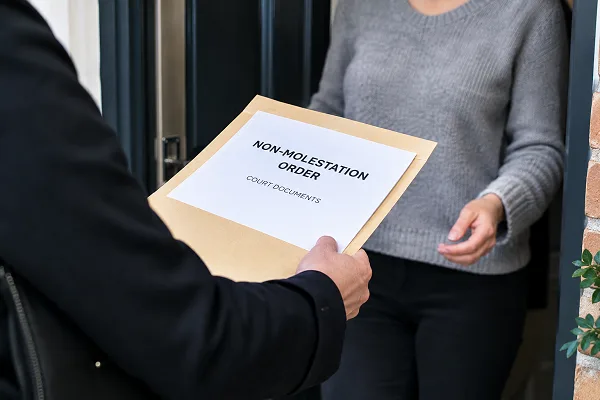
Getting a non-molestation order granted by the court is one thing. Making sure the person it’s aimed at knows about it is another.
Once the order has been served, there are still a few steps to take. The court needs evidence of service, the respondent may have another hearing to attend, and there needs to be a clear record in case the order is breached.
So, what happens next, and why does proof of service matter so much?
What Happens When a Non-Molestation Order Is Served?
When a non-molestation order is served, the person subject to it, known as the respondent, is formally given the court documents.
These explain the restrictions that have been imposed by the court, which could include preventing them from contacting, threatening, harassing or approaching the person the order is designed to protect.
The exact restrictions depend on the circumstances of the case and the wording of the order – it’s not a standardised thing.
Once the documents have been served, the respondent has been formally notified of the order and its terms. That’s particularly important if there’s a future allegation that they’ve breached those restrictions.
However, serving the order doesn’t necessarily mean the legal proceedings are over with. There may still be further hearings, particularly if the order was originally granted without the respondent being present.
Does a Non-Molestation Order Take Effect Immediately?
A non-molestation order usually takes effect from the date and time specified by the court. It doesn’t necessarily have to be served before it becomes effective.
However, there’s an important distinction between an order being in force and someone being held criminally responsible for breaching it. They can’t be convicted of breaching an order if they’re not aware of it.
That’s why it’s important to serve the order promptly and keep proper records. If the respondent later claims they didn’t know about it, there’s evidence to show otherwise.
Why Proof of Service Is So Important
Simply handing someone legal documents isn’t the end of a process server’s responsibility.
The court needs reliable evidence confirming that service has taken place. This is usually provided through a certificate of service, which records the circumstances in which the documents were delivered.
The information will typically include:
- The date and time the documents were served.
- The location where service took place.
- How the respondent was identified.
- The method used to serve the documents.
- Details of the person who carried out the service.
This documentation can become extremely important if the respondent subsequently claims they never received the order or weren’t aware of its existence. Evidence matters, because otherwise it just becomes your word against theirs.
What Happens After the Certificate of Service Is Completed?
Once the order has been served, the completed certificate of service needs to be filed with the court – that’s essentially the evidence of service being logged, officially.
If a solicitor has instructed the process server, the relevant documents will normally be returned to them, and it’ll be the solicitor’s job to deal with the next stages of the proceedings.
There are also steps that need to be followed to make sure that the police get the relevant information about the order. This helps officers understand which restrictions are in place if an incident is subsequently reported.
It’s important that all the necessary paperwork is dealt with quickly, particularly when an upcoming court hearing is involved.
What Happens if the Non-Molestation Order Is Breached?
Breaching a non-molestation order can be a criminal offence, with a potential prison sentence of up to five years.
For example, if the order prohibits someone from contacting their former partner, deliberately sending threatening messages or approaching them in breach of its terms could lead to police involvement.
Anyone who believes an order has been breached should contact the police. If there’s an immediate threat or danger, they should call 999.
Evidence of service can play an important role in these situations, as it’s proof that the respondent knew about the order.
However, the exact circumstances of the alleged breach will still need to be considered, and proof of service alone doesn’t automatically establish that an offence has been committed.
Will There Be Another Court Hearing?
A non-molestation order may initially be granted “without notice”, which means the respondent wasn’t informed about the application before the court made its decision.
This might happen where the court considers that giving advance warning could put someone at risk or where immediate protection is necessary.
When an order is made without notice, the court will generally arrange a further hearing, giving the respondent an opportunity to attend and respond.
The documents served may therefore include information about the next hearing, alongside the order itself.
Accurate and timely service is even more important in these circumstances, as the court needs to know whether the respondent has received the relevant paperwork and knows they’ve got to attend a court session.
How Can a Professional Process Server Help?
Serving a non-molestation order can be sensitive, especially where there’s a history of conflict, harassment or domestic abuse. The person seeking protection shouldn’t attempt to serve the documents themselves, for obvious reasons.
A professional process server knows how to approach these situations, including what to do if the respondent refuses to accept the documents or tries to avoid being served.
An experienced process server can arrange personal service, make appropriate attempts to locate the respondent and provide the necessary evidence once service has been completed.
If the respondent can’t be located or service proves difficult, the process server can also provide information about the attempts made, helping the instructing solicitor decide what steps to consider next.
Need Help Serving a Non-Molestation Order?
Serving a non-molestation order isn’t always straightforward, especially if the respondent is difficult to locate or unwilling to cooperate.
EJM Investigations can take care of the service and provide the necessary paperwork afterwards, so you have clear evidence of what’s been done.
Whether you’re a solicitor arranging service on behalf of a client or an individual who needs help with serving a non-molestation order, we’re here to assist.
For professional process serving services, call EJM Investigations on 01772 334700 to discuss your requirements.