
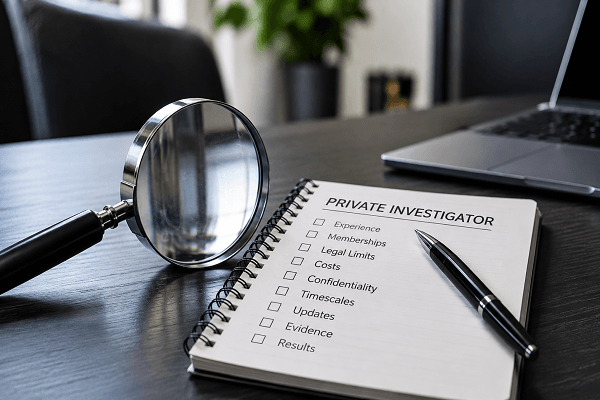
Hiring a private investigator isn’t something most people do regularly. You might be concerned about a partner’s behaviour, trying to locate someone you’ve lost touch with or dealing with a sensitive issue at work, not exactly everyday occurrences.
Whatever the circumstances, it’s important to know who you’re hiring and what you can expect from them.
Not all investigations are the same, and neither are the agencies carrying them out. Before you commit to anything, there are some useful questions worth asking to make sure you’re choosing the right people for the job.
1. What Experience Do You Have With Cases Like Mine?
Private investigators can deal with a wide variety of situations, from tracing missing people to investigating suspected fraud or carrying out surveillance.
It’s worth asking whether the investigator has handled similar cases before. Someone with experience in the type of investigation you need will have a better understanding of the challenges involved and what’s realistically achievable.
They should also be able to explain how they’d approach your situation without making promises they can’t keep.
2. Are You a Member of a Professional Association?
In the UK, private investigators aren’t currently required to hold a specific licence to operate as private investigators. That’s why it’s so important to do your own checks before hiring someone.
Membership of a recognised professional organisation, such as the World Association of Professional Investigators (WAPI), can be a useful indicator of an agency’s commitment to professional standards.
It’s also worth checking how long the agency has been operating and whether it has an established reputation – look for reviews!
3. What Can You Legally Do During an Investigation?
There are limits to what a private investigator can legally do, and a reputable agency should be upfront about them.
For example, private investigators don’t have the same powers as the police. They can’t hack into someone’s phone, access private bank accounts without authorisation or enter private property without permission.
However, they can carry out lawful surveillance, research publicly available information and use legitimate investigative methods to gather evidence.
If someone claims they can obtain any information you want, regardless of how it’s protected, that’s a very good reason to be cautious.
4. How Much Will the Investigation Cost?
Private investigator costs can vary considerably depending on the type of work involved, the resources required and how long the investigation is expected to take.
Some assignments are relatively straightforward, while others might involve several investigators, specialist equipment or work across different locations.
A good private investigator agency will be happy to explain how its charges work, and provide an indication of likely costs once it understands your requirements. Set fees don’t really exist until a conversation has at least happened about what’s required, so don’t expect to be able to call and ask for a pricelist up front.
5. Are There Any Additional Fees I Should Know About?
Alongside the main investigation costs, it’s worth asking whether there could be additional charges.
For example, travel expenses, mileage, or what happens if the investigation proves to be trickier than expected.
You should also ask whether there’s a minimum booking period or any other conditions that might influence private investigator fees. Understanding these details at the beginning can help you avoid surprises later on.
6. How Will You Keep My Information Confidential?
Many people contact a private detective agency about highly personal matters. You might be discussing relationship concerns, financial difficulties, sensitive business information or a family dispute.
Naturally, you’ll want to know that anything you share will be handled discreetly.
Ask how the agency protects your personal information, who’ll have access to the details of your case and how any findings will be communicated to you.
A professional investigator should take confidentiality seriously and be able to explain how they handle sensitive information in accordance with data protection laws.
7. How Long Is the Investigation Likely to Take?
It’s understandable to want answers as quickly as possible, particularly if you’re dealing with a stressful situation.
But you can’t always predict how long an investigation is going to take.
Tracing someone might be straightforward if there’s plenty of reliable information available. On the other hand, surveillance could depend on someone’s movements, changing routines or circumstances outside the investigator’s control.
An experienced investigator should be able to give you a realistic idea of the timescales involved, while explaining why things might take longer than expected.
8. Will I Receive Updates During the Investigation?
You don’t want to hire a private investigator and then hear nothing until the work is finished.
Before agreeing to proceed, ask how frequently you can expect updates and how communication will work.
Some investigations might require regular contact, particularly if decisions need to be made as new information emerges. Others may involve longer periods where there’s simply nothing significant to report.
The important thing is to establish expectations from the outset.
9. What Evidence or Reports Will I Receive?
Different investigations produce different types of findings.
Depending on the nature of your request, you might get a written report, photographs, video footage or information obtained through legitimate research.
It’s worth asking what form the final results will take and whether they’ll be suitable for your intended purpose.
For example, evidence gathered for use in legal proceedings may need to meet particular requirements. If you’re working with a solicitor, it’s sensible to explain this before the investigation begins.
10. What Happens if You Can’t Get the Results I’m Hoping For?
This is one of the most important questions to ask, even though it might not be the answer you want to hear.
Private investigations don’t always produce conclusive results. Someone being traced may have left very little information behind, or surveillance may not reveal the behaviour you suspected.
A reputable investigator won’t guarantee a particular outcome or tell you what you want to hear simply to secure your business.
Instead, they should explain the limitations of the investigation, what steps they’ve taken and what options might be available if the initial work doesn’t produce an answer.
Choosing the Right Private Detective Agency
When you’re considering private detective hire, it’s really tempting to focus on price or how quickly an agency claims it can get results. But experience, professionalism, discretion and honest communication are just as important.
A good investigator will take the time to understand your circumstances, explain what’s possible and help you decide whether an investigation is the right approach.
At EJM Investigations, we work with private individuals, businesses, solicitors and local authorities on a wide range of investigative assignments. We understand that every situation is different, and we’re always happy to discuss your requirements before recommending a suitable approach.
If you’re considering hiring a private investigator and would like to talk through your options, call EJM Investigations on 01772 334700.